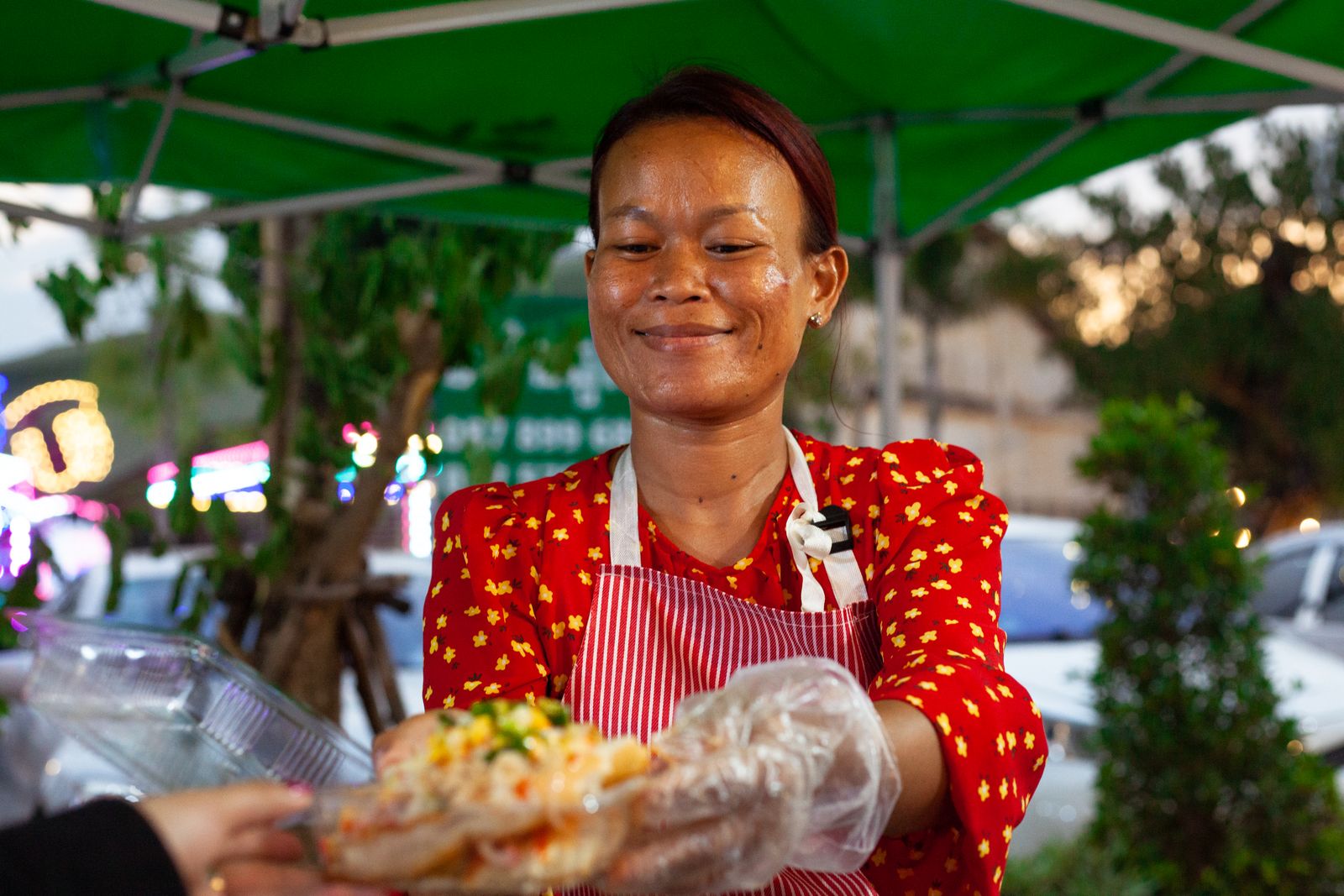
Cambodia’s food story is one of the most fascinating in Southeast Asia — a cuisine that was nearly erased during the Khmer Rouge years, when cooking anything outside what the regime specified was punishable by death, and has since been painstakingly revived by a new generation of Cambodian chefs determined to reclaim their culinary heritage.
The result is food with a depth of meaning beyond the plate.
The Flavour Profile of Khmer Cuisine
Khmer food is not as fiery as Thai or as sour as Vietnamese — it occupies a distinctive middle ground, characterised by:
- Kroeung — the aromatic lemongrass-galangal-turmeric paste that forms the base of countless dishes
- Prahok — fermented fish paste, the “umami engine” of Khmer cooking, deeply savoury and complex
- Fresh herbs — kaffir lime leaves, holy basil, Vietnamese mint, banana blossom
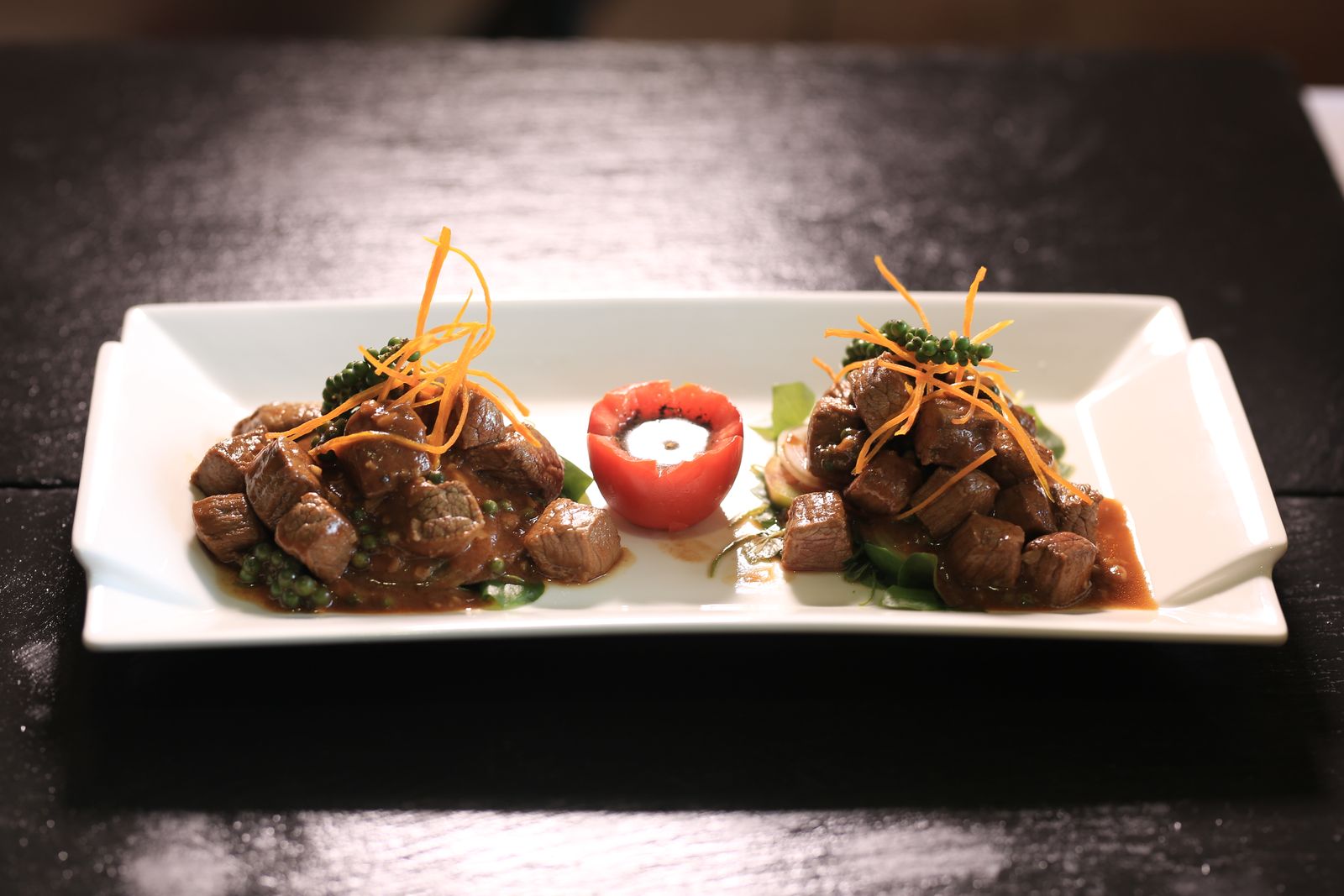
- Kampot pepper — the world’s finest, used fresh-ground on everything
The cooking style prizes subtle complexity over heat. Dishes are meant to be eaten together in a shared meal, not in sequence.
The Essential Dishes
Fish Amok — Cambodia’s National Dish
Custard-like fish curry steamed in coconut milk with kroeung paste in a banana leaf cup. The texture is somewhere between a mousse and a soufflé — nothing quite like it exists anywhere else. Order it at Mahob (Siem Reap) or Malis (Phnom Penh) for the definitive version.
Lok Lak — The Everyday Classic
Wok-fried beef marinated in oyster sauce and black pepper, served on a bed of lettuce with a dipping sauce of lime juice, salt, and Kampot pepper. Often topped with a fried egg. Found in every Cambodian restaurant from roadside stalls to upscale dining rooms. Order it with rice.
Bai Sach Chrouk — The Cambodian Breakfast
Pork (sach chrouk) marinated in garlic and coconut milk, grilled over charcoal, served over rice with a clear broth and pickled vegetables. Available only in the morning, from street carts, for about $1.50. The best breakfast in Cambodia.
Nom Banh Chok — Khmer Noodles
Cold rice noodles topped with a delicate fish-based green curry sauce and heaped with fresh bean sprouts, banana blossom, green beans, and herbs. Eaten for breakfast or lunch. Find it at morning market stalls across the country.
Kuy Teav — Noodle Soup
Similar to Vietnamese pho but with a lighter, sweeter pork-based broth. Add lime, chilli, and fish sauce to taste. Essential hangover cure and post-long-bus-journey comfort food.
Markets: Where Cambodia Eats
Phsar Tmei (Central Market), Phnom Penh: The Art Deco yellow dome is one of Phnom Penh’s landmarks, but the food vendors clustered around the exterior edges are where you want to eat. Bai sach chrouk at 7 AM, noodle soup at 8 AM.
Russian Market, Phnom Penh: The stalls at the market’s perimeter (particularly the southwest corner) serve excellent loc lac, grilled meats, and fresh fruit. Order from the elderly aunties for the most authentic experience.
Old Market, Siem Reap: The night market extension off the Old Market has excellent Khmer barbecue stalls, fresh spring rolls, and every Cambodian street food staple imaginable. Budget $5–8 for a generous meal.
Kampot Morning Market: Small but exceptional. Come early (6–9 AM) for freshly made nom banh chok, durian in season, and the vendors who sell nothing but dried shrimp, river fish, and locally grown produce.
Kampot Pepper: The World’s Best
In 2016, Kampot pepper became Cambodia’s first product to receive European Union Protected Geographical Indication status. The PGI certification means that only pepper grown in Kampot and Kep provinces from traditional varieties can be labelled “Kampot Pepper.”
The flavour — particularly of fresh green or red Kampot pepper — is extraordinary: floral, complex, with a heat that blooms slowly and then fades. Chef Joël Robuchon, who held more Michelin stars than any chef in history, called Kampot pepper “the best pepper in the world.”
Where to experience it at its finest: Kep Crab Market. Order a whole steamed crab with fresh Kampot green pepper. Eat by the sea. Repeat.
Cambodian Cooking Classes
Taking a cooking class is one of the most worthwhile things you can do in Cambodia. Most run half-day sessions (4 hours) that begin with a guided market tour, then progress through 4–5 recipes. Recommended:
- Siem Reap: Nary Kitchen, Le Tigre de Papier, or the Cambodia Cooking Class
- Phnom Penh: Romdeng Restaurant (social enterprise, also excellent restaurant), Daughters of Cambodia
- Kampot: Sothy’s Pepper Farm offers a pepper-focused farm-to-table experience
Drinking Cambodia
Palm wine (tuk tnot) — sweet, slightly fermented sap tapped from sugar palms. Drink it fresh from a vendor; it turns alcoholic quickly.
Sugarcane juice (tuk ampov) — pressed to order from raw cane stalks, served over ice. Everywhere, $0.50.
Cambodian craft beer — the local craft beer scene is small but growing fast. Kingdom Breweries in Phnom Penh is the standout.
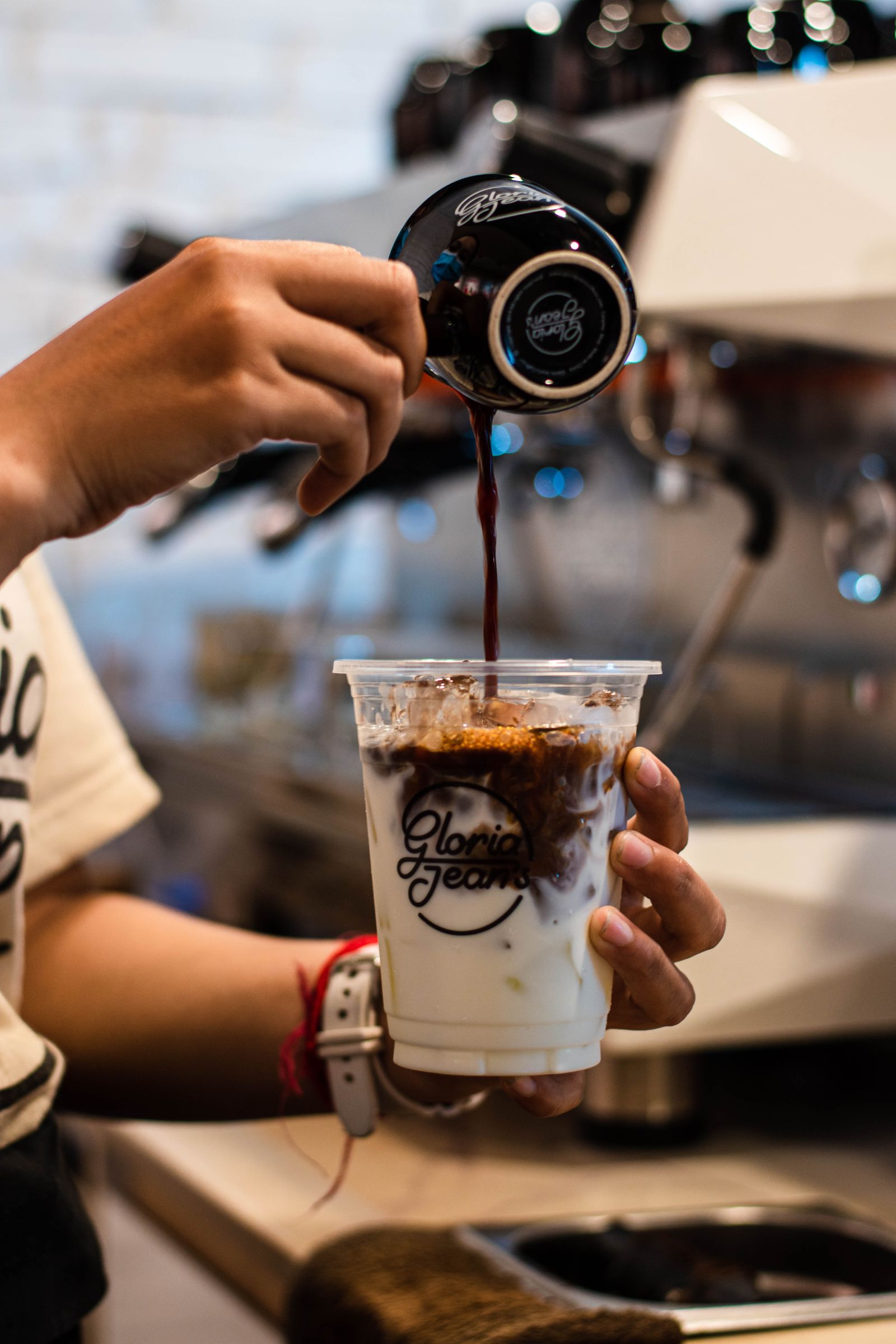
Coffee — Cambodian robusta coffee, grown in the highlands of Mondulkiri, is excellent. Drip coffee (kafe drip) with sweetened condensed milk on ice is the local style.
Related Articles
CambodiaGo Editorial
cambodiago.com Editorial
Ready to Visit Cambodia?
Browse itineraries, destinations, and everything you need to plan your trip.